A Tale of Two Indias: North Chokes as South Breathes Easy
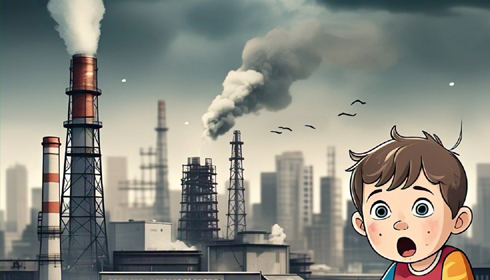
As the sun set on October 29, 2025, India's air revealed two starkly contrasting stories. From Delhi to Panchkula, the air was thick, gloomy, and full of hidden threats. However, in the southern and northeastern cities, the skies remained blue, and the air was clean enough to breathe without concern. The most recent Central Pollution Control Board (CPCB) data shows a worrying map of a country separated not only by geography but also by the air its residents breathe.
The majority of the 247 Indian cities assessed were rated satisfactory to moderate. However, the situation worsened in the north, where pollution reached worrisome levels.
Delhi had an AQI of 279 (Poor), whereas adjacent towns like Baghpat (320), Ballabgarh (319), Charkhi Dadri (323), Panchkula (334), and Meerut (312) were above the "Very Poor" level, indicating respiratory distress for even fit people.
In contrast, southern metros such as Bengaluru (70), Chennai (70), and Hyderabad (56) reported satisfactory air. Shillong (19) and Gangtok (19) in the northeast stayed in the Good category, demonstrating to the rest of India what clean air feels like.
PM2.5, or tiny particulate matter small enough to reach the bloodstream, was the most prevalent pollutant throughout the polluted northern belt.
Experts warn that continuous exposure to PM2.5 can irritate lung tissue, raise blood pressure, and increase the risk of asthma and heart disease. PM2.5 levels in industrial towns such as Bhiwadi (214) and Rohtak (268), as well as traffic-heavy routes throughout the NCR, represented a cocktail of vehicular pollution, crop residue burning, and stagnant air trapped by the arrival of winter.
Meanwhile, PM10, or coarse dust particles, dominated readings in western and southern cities, pointing to road dust, construction, and industrial emissions as the primary culprits.
While PM2.5 and PM10 were the main focus, small amounts of ozone (O₃), carbon monoxide (CO), and nitrogen dioxide (NO₂) were found in some cities, showing that there is additional pollution caused by Experts believe this will soon become the next major urban concern.
Equally disturbing is the data gap. Forty-six cities, including Faridabad, Hisar, Karnal, Kochi, and Srinagar, were excluded from the AQI bulletin due to a lack of data – a gap that affects both public awareness and policy responsiveness. "What we can't measure, we can't manage," says an environmental analyst at Delhi University.
Despite numerous interventions ranging from stubble management in Punjab to vehicle limits and industrial curbs under GRAP in Delhi-NCR, the air remains mostly unaltered each winter. Experts contend that these are only temporary remedies. Real improvement necessitates cleaner fuels, widespread EV adoption, decentralised air quality monitoring, and better enforcement across state lines. Until then, India will continue to exist in two realities: one gasping for air and the other breathing freely.
Be first to post your comments