WHO Warns Funding Crisis Threatens Progress as New Analysis Debunks Vaccine–Autism Myth Again
The WHO has released a fresh scientific evaluation that confirms that vaccines do not cause autism. This statement comes at a time when the organisation is facing one of the worst funding crises in its history. The warning comes at a time when progress in global health is in danger of halting, especially for low-income communities that rely significantly on routine vaccination and emergency health care.
The Global Advisory Committee on Vaccine Safety published the study, which looked at 31 studies across 15 years and 31 nations. It discovered "no causal link between vaccines and autism"—even for vaccines that include thiomersal or aluminium, which are often mentioned in false information campaigns. The conclusion aligns with three previous WHO evaluations conducted in 2002, 2004, and 2012. WHO said, "Vaccines do not cause autism." "Vaccines make adults."
More than twenty years have passed since a 1998 article in The Lancet incorrectly linked immunisations to autism. Later, it was found that the study was fake and was taken down, but its effects have lasted, making it harder for public health efforts around the world.
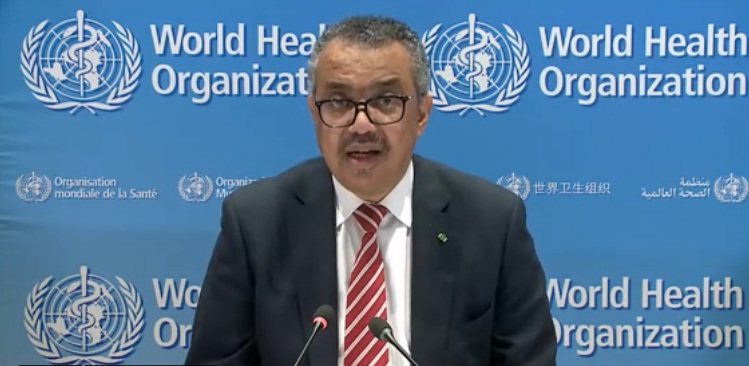
Dr. Tedros, the director general of WHO, emphasised that the data was clear and encouraged states not to let false information damage childhood immunisation. In the past 25 years, the number of fatalities of children under five has gone down from 11 million a year to 4.8 million. Vaccines are still a big part of that success. They protect against about 30 diseases, such as measles, cervical cancer, and malaria.
The EPA also warned that both COVID-19 and the flu are still changing. A new "K subclade" of the H3N2 flu virus is spreading, but it doesn't seem to be getting worse. The World Health Organisation (WHO) is closely monitoring a new variant of COVID-19 known as BA.3.2. These news stories come out just before Universal Health Coverage (UHC) Day, when the WHO and the World Bank warn that 4.6 billion people still don't have access to basic health services and 2.1 billion are having trouble paying for medical care. Countries must protect immunisation as a core service to prevent child mortality and disease control from getting worse.
However, the WHO's capacity to assist countries is also under scrutiny. WHO is short $500 million in salaries because the US has decided to leave the institution and other countries are giving less. Dr Tedros observed, "This has been a crisis long in the making." He pointed out that WHO has relied significantly on voluntary donations since the 1980s.
WHO pointed out big wins in 2025, even though they had to deal with a financial shock. These included stopping Ebola outbreaks, certifying countries as malaria-free, and coordinating humanitarian aid in Gaza, Sudan, and Ukraine. Dr Tedros emphasised that the world still needs a strong WHO that is dedicated to the idea that health is a right for everyone, not just a few.
Be first to post your comments