India Launches National Action Plan on AMR 2.0, Renewing Battle Against a Growing Health Crisis
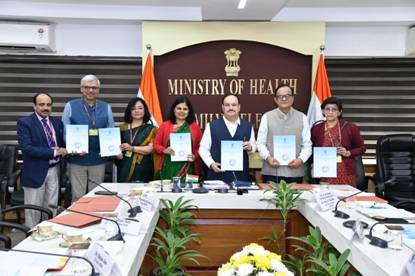
Union Health Minister Jagat Prakash Nadda has launched the second version of India’s National Action Plan on Antimicrobial Resistance (NAP-AMR 2025–29), marking a significant step forward in the country’s fight against one of the most pressing global health threats.
Speaking at the launch, Nadda described antimicrobial resistance as a growing emergency that can no longer be ignored. He recalled how India began addressing AMR as early as 2010, which eventually led to the introduction of the first National Action Plan in 2017. Over the years, the challenge has intensified, particularly in areas such as surgery, cancer care, and critical treatments, where the effectiveness of antibiotics is essential.
He warned that the widespread misuse and overuse of antibiotics has now become a serious concern, making corrective action urgent and unavoidable.
The new version of the action plan aims to fix the gaps identified in the earlier phase by strengthening ownership across ministries, boosting coordination between sectors, and ensuring greater participation from private healthcare providers.
Nadda stressed that creating awareness, upgrading training, expanding laboratory capacity, and improving infection control in hospitals will be central to India's strategy going forward. He also underlined the importance of regular discussions among stakeholders to identify challenges early and work collaboratively to solve them.
Dr. A.K. Sood noted that the release of NAP-AMR 2.0 coincides with the first day of the WHO’s World Antimicrobial Awareness Week, making the launch especially significant. He described AMR as a “pandemic-like” threat that is affecting numerous countries, particularly in Asia and Africa. According to him, India has taken several pioneering steps to curb the misuse of antibiotics and limit the spread of resistance.
He cited examples such as Kerala and Gujarat, which were the first states to ban the over-the-counter sale of antibiotics. He also highlighted India’s efforts to restrict certain antimicrobials and pesticides used in agriculture, along with the establishment of the India AMR Innovation Hub, which has helped foster research, innovation, and collaboration across national and international institutions.
Antimicrobial resistance is widely recognized as a crisis that carries serious health, economic, and political consequences. It delays treatment, increases healthcare costs, and puts at risk the safety of procedures ranging from surgeries to cancer therapies and organ transplants. Experts warn that AMR has the potential to undo decades of progress in modern medicine and could eventually weaken economies worldwide.
India’s work on AMR is rooted in its One Health approach, which acknowledges that the problem spans human health, animal health, agriculture, and the environment.
The development of NAP-AMR 2.0 began in 2022 with extensive consultations involving public health experts, researchers, civil society, environmental groups, and experts from the animal husbandry and agriculture sectors. High-level meetings at NITI Aayog helped shape ministry-specific action plans, each with clear timelines and allocated budgets.
Following today’s launch, every participating ministry will now prepare its own roadmap for implementation. This will include close engagement with private healthcare providers, research institutions, NGOs, cooperatives, industries, academic bodies, and international partners. During the event, representatives from several ministries — including Fisheries, Animal Husbandry, Agriculture, Environment, Science and Technology, Chemical and Fertilizers, AYUSH, Jal Shakti, Information and Broadcasting, and Education — reiterated their commitment to fighting antimicrobial resistance as a unified national effort.
With the unveiling of NAP-AMR 2.0, India has renewed its commitment to tackling a threat that experts say could become one of the biggest health challenges of the century. The message from today’s launch was clear: the fight against antimicrobial resistance demands urgency, collaboration, and long-term planning — and India is prepared to lead that fight.
Be first to post your comments