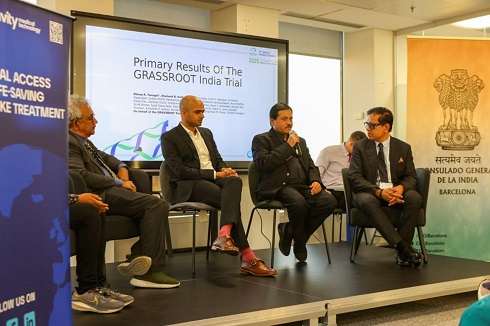
AIIMS Puts India on the Global Stroke Map with Breakthrough Brain Stent Trial
In a moment that could reshape how strokes are treated in India, AIIMS New Delhi has led the country’s first-ever clinical trial of a cutting-edge brain stent—proving that world-class medical innovation can be designed, tested and approved right here at home.
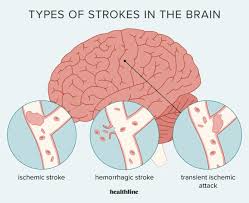
AIIMS served as the national coordinating centre and the largest enrolling site for the GRASSROOT Trial, India’s first dedicated clinical study of the Supernova stent-retriever, an advanced device used to remove clots from the brain during severe strokes.
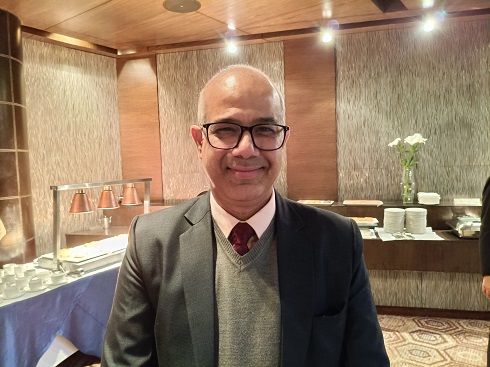
For doctors on the frontlines, this marks more than just a scientific success. “This trial is a turning point for stroke treatment in India,” said Dr. Shailesh B. Gaikwad, Professor and Head of Neuroimaging and Interventional Neuroradiology at AIIMS and the National Principal Investigator of the study.
The results of the GRASSROOT Trial have now found a place in the Journal of Neurointerventional Surgery (JNIS), a leading international journal under the British Medical Journal (BMJ) group. The findings show what clinicians hoped for—strong safety and impressive effectiveness of the Supernova stent in treating life-threatening strokes.
What makes this achievement truly historic is what followed. Earlier this year, the Central Drugs Standard Control Organisation (CDSCO) approved the Supernova stent-retriever for routine clinical use, based entirely on data generated in India. It is the first stroke device in the country to receive clearance through a domestic clinical trial, a milestone that signals India’s growing confidence and capability in high-quality clinical research.
Conducted across eight centres, the GRASSROOT India Trial also aligns closely with the Make-in-India vision. Instead of relying on imported devices and foreign data, Indian clinicians generated robust evidence at home—evidence that now stands shoulder to shoulder with global standards.
“This was world-class science, produced entirely in India,” said Dr. Ashutosh Jadhav, Chief Scientific Officer at Gravity Medical Technology. He added that the trial has created a strong foundation for future large-scale clinical studies. Dr. Deepti Vibha, Professor of Neurology at AIIMS, drew attention to another often-overlooked group—the patients and their families. Their willingness to participate, she said, will help ensure faster access to safer and more affordable treatments for millions.
For the device makers, the approval represents something bigger than regulatory success. “This is about equity and access,” said Dr. Shashvat M. Desai, Chief Technology Officer at Gravity Medical Technology. He noted that the trial proves India can lead globally relevant research while ensuring advanced therapies reach patients without delay. He also credited the achievement to the leadership of Dr. Gaikwad and his team, whose three decades of experience in stroke care shaped the study.
Dr. Gaikwad, in turn, acknowledged the collective effort behind the scenes, thanking his AIIMS colleagues—including Dr. Manjari Tripathi, Dr. Rohit Bhatia, Dr. Achal Srivastava, Dr. Vishnu, Dr. Awadh K. Pandit, Dr. Rajesh Singh, Dr. Ayush Agrawal and Dr. Savyasachi Jain—for their crucial contributions.
Developed by Gravity Medical Technology, the Supernova stent was designed with Indian patients in mind. In India, strokes often strike at a younger age than in Western countries, demanding devices that are both effective and adaptable.
According to Dr. Dileep Yavagal, Professor of Neurology and Neurosurgery at the University of Miami and Global Principal Investigator of the GRASSROOT Trial, the device has already been used in more than 300 patients across Southeast Asia.
Now, with manufacturing shifting to India, the stent will be available at affordable prices—offering new hope to the nearly 1.7 million Indians who suffer a stroke every year.
From laboratory to bedside, the GRASSROOT Trial tells a powerful story: India is no longer just adopting global medical advances—it is helping create them.
Be first to post your comments