Cheap, Safe, and Effective: Common Drugs Team Up to Fight Untreatable Liver Scarring
According to new research released this month, a combination of long-used medications might provide a speedier, more cost-effective way to treat liver fibrosis, a common but frequently undiscovered illness that affects hundreds of millions of people worldwide.
Liver fibrosis develops when the liver sustains repetitive or long-term damage, such as from viral hepatitis, alcohol abuse, fatty liver disease, toxins, or autoimmune diseases, causing excessive scar development. Over time, this scarring can lead to cirrhosis or liver cancer. Despite decades of study, no medicine has been authorised to specifically treat fibrosis.
A team led by Hong Wang and Haiping Hao from China Pharmaceutical University undertook the latest study, published in Targetome on December 15, 2025 (DOI: 10.48130/targetome-0025-0009). The study reveals that a fixed-dose combination of silybin and carvedilol outperforms each medicine individually.
"The study shows that this drug pair works far better together than either agent alone, offering a realistic and potentially fast path towards a new antifibrotic therapy," according to the scientists.
Silybin, produced from milk thistle, is commonly used as a liver supplement due to its antioxidant and anti-inflammatory properties. Carvedilol is a well-known beta-blocker used to treat cardiac problems and portal hypertension in liver disease. Individually, both have failed to completely stop the scarring process.
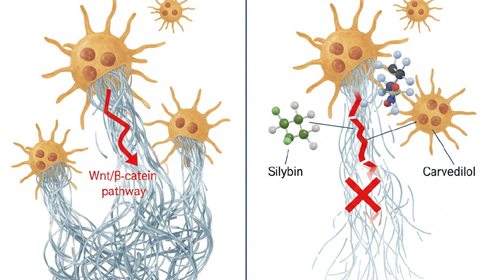
To figure out why, the researchers looked at hepatic stellate cells, which are generally quiescent but start manufacturing massive amounts of collagen when the liver is wounded. Scar tissue is formed when collagen deposits accumulate. The activation of these cells is regulated by several overlapping biological cues, making fibrosis challenging to treat with a single medication.
Silybin was shown to protect liver cells from injury and inflammation in laboratory and animal trials, but it had only a modest effect on inhibiting stellate cells from generating collagen. The discovery emerged after the scientists examined almost 400 already authorised medications alongside silybin and discovered carvedilol to be a strong synergistic companion.
Together, the medications significantly decreased collagen formation and liver scarring in rats, surpassing each drug individually and even outperforming obeticholic acid, an experimental antifibrotic therapy. The combination inhibits the Wnt/β-catenin pathway, which signals stellate cells to produce scars.
The findings are noteworthy since both medications are currently routinely given, affordable, and have a proven track record of safety. This means that the combination might enter clinical trials far faster than a whole new medicine.
Beyond liver illness, the study demonstrates how repurposing current drugs and evaluating them in sensible combinations might open up new therapy options for complicated chronic disorders that have previously defied single-drug treatments.
Be first to post your comments